
Publisher: Brill
Year: 2025
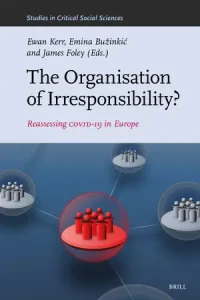
The COVID-19 pandemic posed an unprecedented challenge to contemporary states and systems of governance. Yet, despite the scale of disruption between 2020 and 2022, many existing inequalities, power asymmetries, and modes of decision-making proved remarkably resilient. This volume critically examines how European states governed the pandemic and what the crisis revealed about the limits of post-neoliberal governance.
Bringing together interdisciplinary and critical perspectives, the contributors argue that governing classes and state institutions were largely unequal to the historical moment. Rather than learning how to respond to interconnected political, socio-economic, and ecological crises, many reproduced existing hierarchies and exclusions. The volume highlights how crisis governance is inseparable from political power structures and social contexts, while also showing how it is actively contested, resisted, and reshaped by social groups. It further examines how social cleavages are either deepened or challenged in times of crisis.