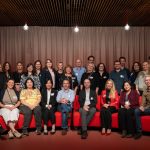
On 1 September 2026, the four-year Horizon Europe research project CULTURAI – Cultivating Inclusive and Sustainable AI Policy for the Creative Sector officially began. The project is implemented by an international consortium coordinated by the National Library of the Netherlands (KB), with the Institute for Development and International Relations (IRMO) as one of its partners. The project focuses on two key areas: the audiovisual (AV) sector and the cultural heritage sector, particularly galleries, libraries, archives and museums (GLAM). Over the next four years, the project will generate new knowledge, practical tools and policy recommendations to support creative professionals, cultural institutions, policymakers and other stakeholders in the responsible and inclusive adoption of artificial intelligence.
Within the CULTURAI project, IRMO leads three tasks: the implementation of national case studies on the adoption of artificial intelligence in the audiovisual sector across five European countries (T6.2), a comparative analysis of their findings and their integration with survey results (T6.3), and the organisation of a Living Lab in Zagreb focusing on the use of AI tools for creative writing and digital storytelling (T11.2). The Living Lab will engage small and medium-sized enterprises (SMEs), freelancers and creative practitioners from the audiovisual sector. In addition to leading these tasks, IRMO contributes to research on AI governance and related cultural policies, the development of the methodological framework for the CULTURAI Living Labs, and the preparation of sector-specific recommendations and policy documents.
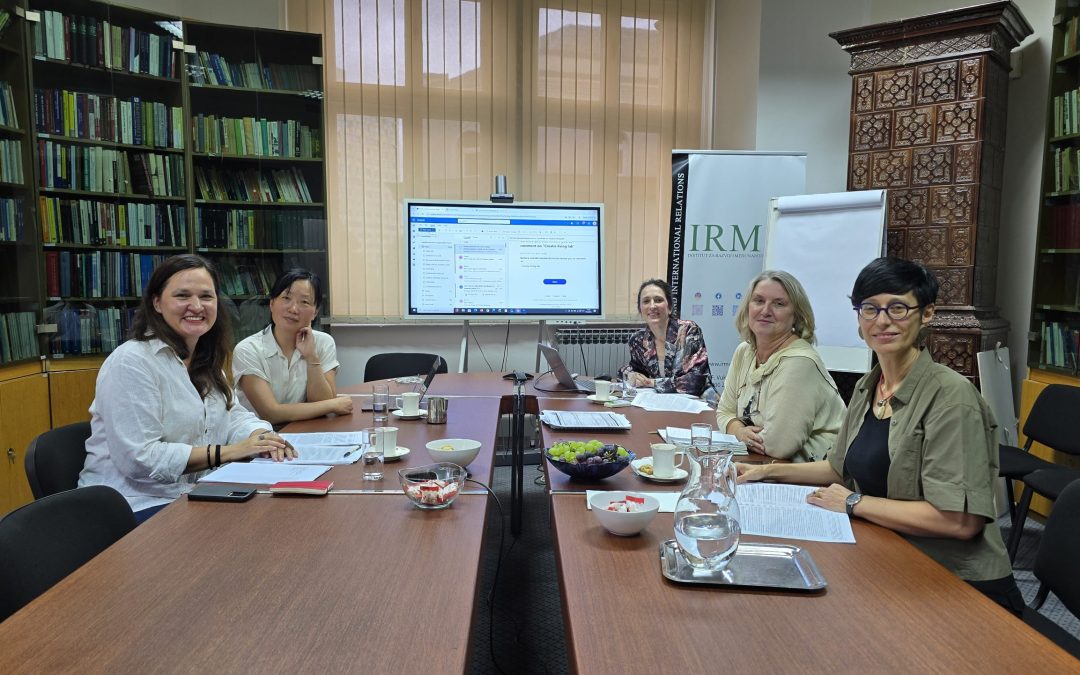
As part of the project’s preparatory activities, researchers from IRMO’s Department for Culture and Communication, led by Dr Aleksandra Uzelac, who coordinates IRMO’s involvement in the project, met at the IRMO Library in Zagreb with Dr Xin Gu, Associate Professor at the Monash University European Research Foundation ETS (MUERF). The meeting focused on the project’s methodology and further exploration of the concept of “Culture for AI”, which emphasises the active role of culture and cultural practitioners in shaping the development and application of artificial intelligence.
Stacey Holman Jones, a scholar specialising in theatre and performance studies at Monash University, also joined the discussion via Zoom. She shared her experience in applying participatory and future-oriented methodologies, including the “Tomorrow Party” approach. Participants explored possible approaches to organising participatory workshops, creatively engaging participants, and enabling practitioners to experiment with AI tools while critically reflecting on their use.
The meeting provided an opportunity to discuss key methodological and organisational issues related to the implementation of the Zagreb Living Lab. Further methodological development will take place in collaboration with the CULTURAI consortium and in accordance with the common Living Labs framework to be developed during the initial phase of the project. These and other issues will also be discussed at the CULTURAI project kick-off meeting, scheduled to take place on 29 September 2026 in The Hague, the Netherlands.
More information about the project is available here: Culturai