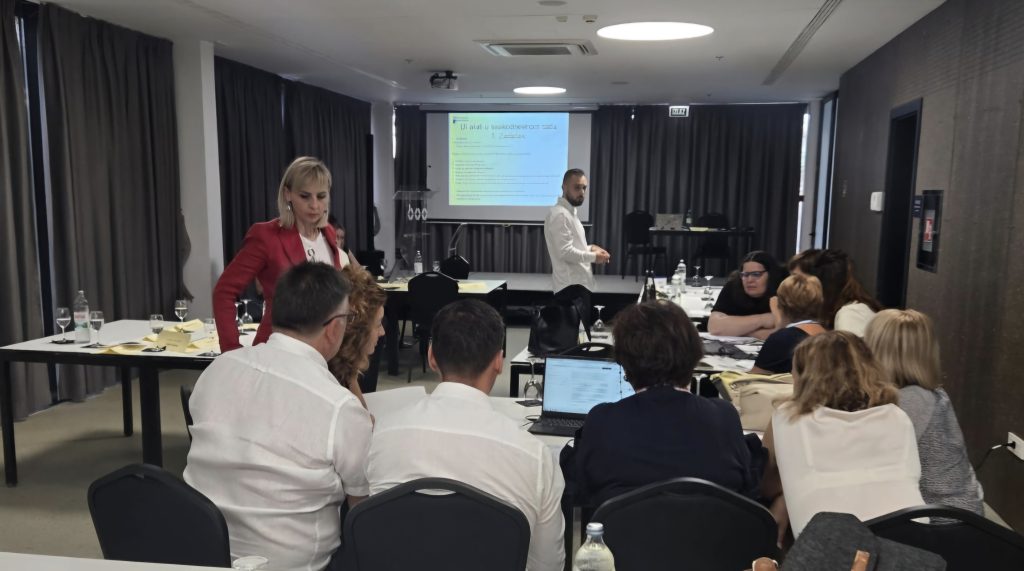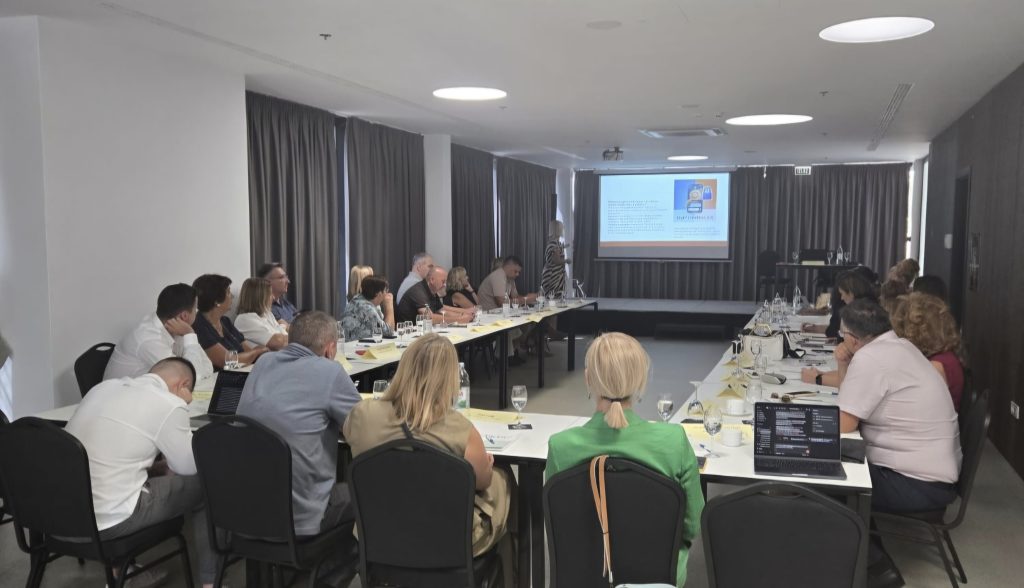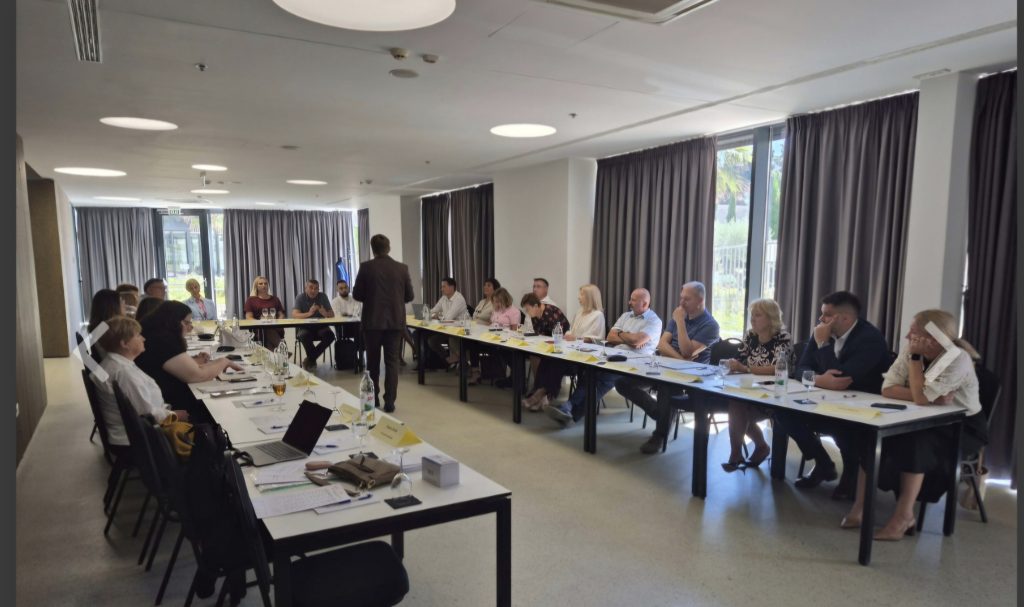
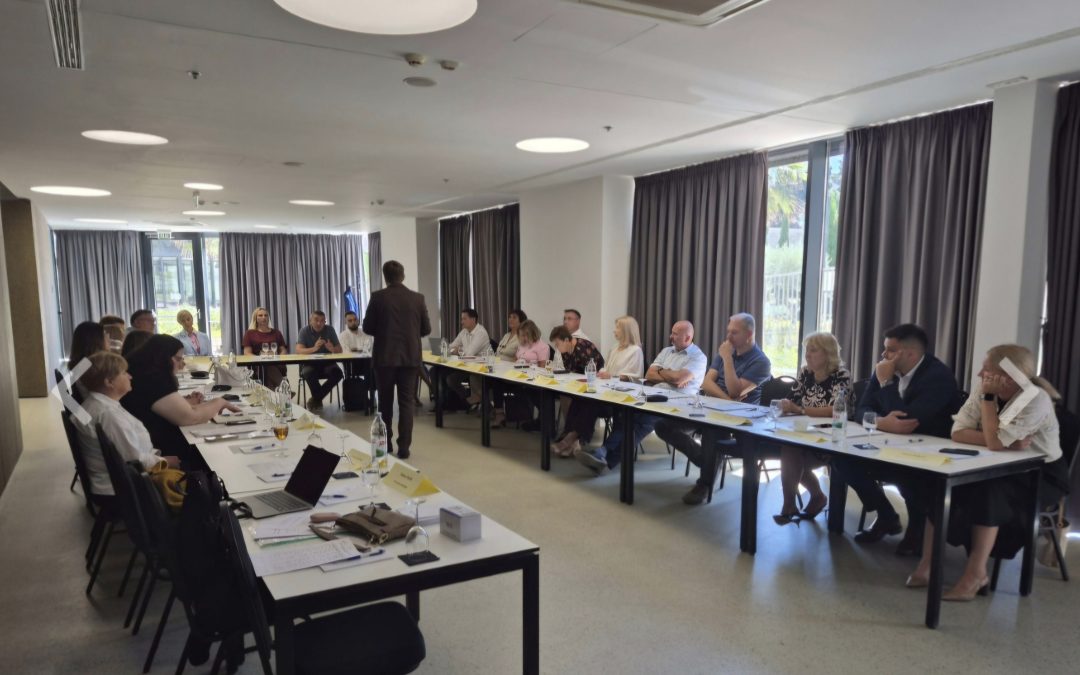
The 3rd Summer School on Artificial Intelligence in the Judiciary was held in Dubrovnik from 26 to 28 August 2026, organised by the Judicial Academy. The programme brought together 22 heads of judicial bodies and senior judicial office holders. Ivana Keser, a researcher at the Institute for Development and International Relations, participated as a lecturer.
This year’s programme focused on deepening participants’ understanding of artificial intelligence and its potential for responsible application in the judiciary. It addressed AI literacy, copyright in the digital environment, digitalisation as reflected in the case law of European courts, the obligations of the judicial sector under the EU Artificial Intelligence Act, and artificial intelligence management systems in accordance with ISO/IEC 42001:2023.
Ivana Keser’s lectures examined strategic planning in the judiciary, with particular attention to the digitalisation process, its positive effects and potential adverse consequences, as well as the challenges and barriers encountered in the day-to-day work of judicial bodies. Particular emphasis was placed on identifying progress achieved to date and opportunities for further systemic improvement.
A separate programme component addressed the mid-term evaluation of two strategic planning documents in the fields of justice and digitalisation. Evaluation was presented as an important instrument for assessing the relevance, effectiveness and sustainability of implemented measures and for linking strategic objectives to the practical experience of judicial bodies responsible for their implementation.
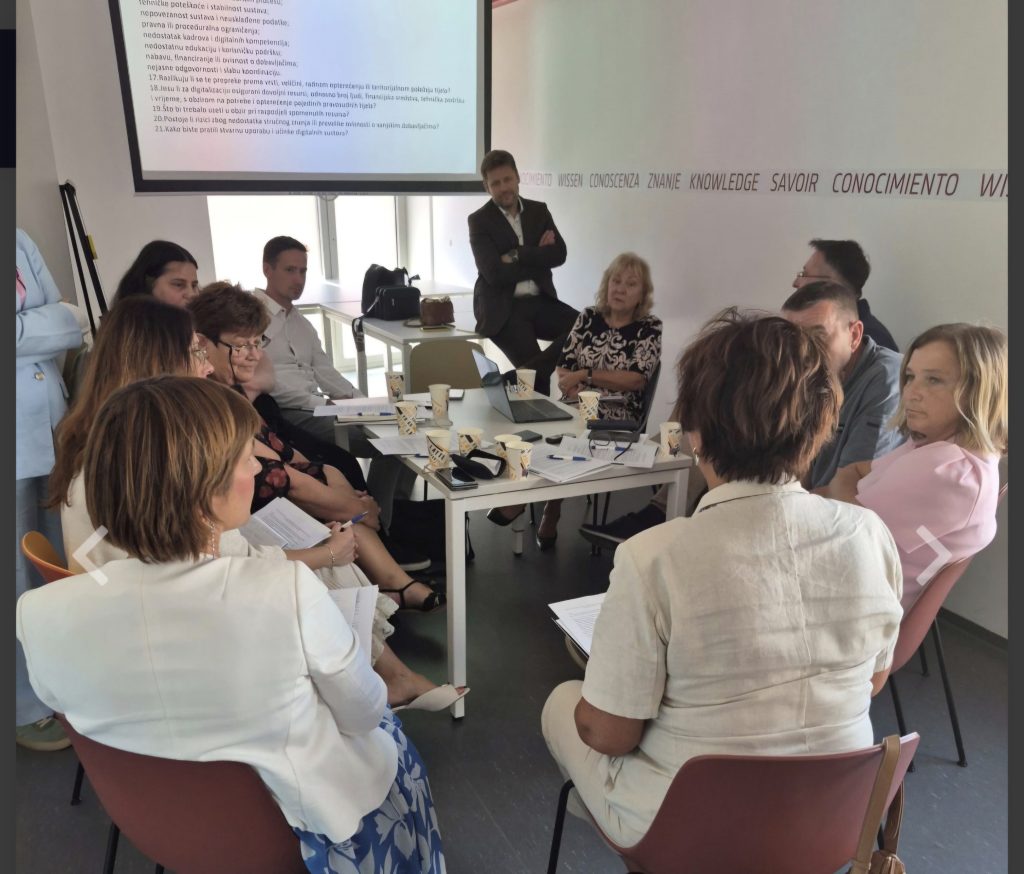
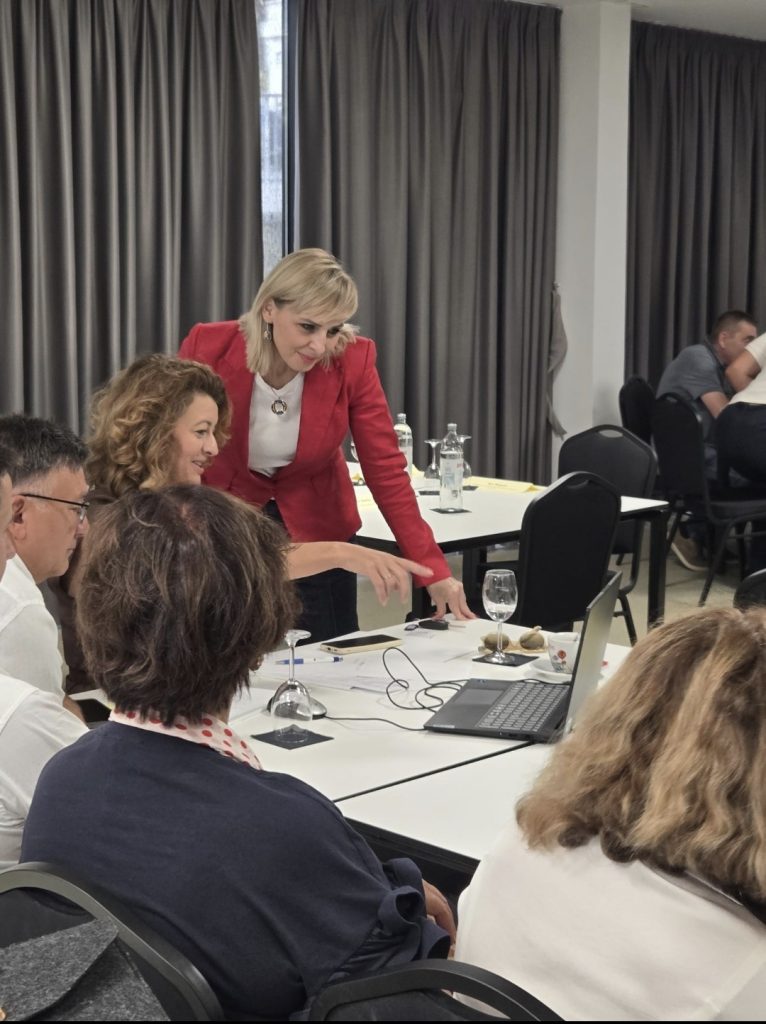
The sessions followed a highly interactive, workshop-based format. Through group work, focused discussions and the exchange of professional experience, participants examined opportunities for applying digital and AI tools, identified organisational and implementation-related barriers, and considered the need to further strengthen competencies, coordination mechanisms and institutional capacities. The participants’ high level of engagement and the substantive quality of the discussions contributed significantly to the robustness of the conclusions and the successful delivery of the programme.
The 3rd Summer School was led by Professor Mihael Mišo Mudrić, PhD, of the University of Zagreb Faculty of Law; Ivana Keser, PhD, LLM, of IRMO; Associate Professor Dunja Duić, PhD; and Ivan Vidaković, dipl. iur., of the Faculty of Law at Josip Juraj Strossmayer University of Osijek. The lecturers’ collaborative and interdisciplinary approach enabled legal, governance, strategic and practical perspectives on the use of artificial intelligence in the judiciary to be integrated. On the final day, the participants were also addressed by Damir Habijan, Minister of Justice, Public Administration and Digital Transformation.
The third edition of the Summer School reaffirmed the importance of continuous professional development and interinstitutional exchange in the field of artificial intelligence. Through its participation in the programme, IRMO contributed to linking scientific and evaluation-based approaches with the concrete needs of the judicial system and to strengthening capacities for the strategic and responsible governance of digital transformation.
Further information: Judicial Academy – 3rd Summer School on Artificial Intelligence in the Judiciary