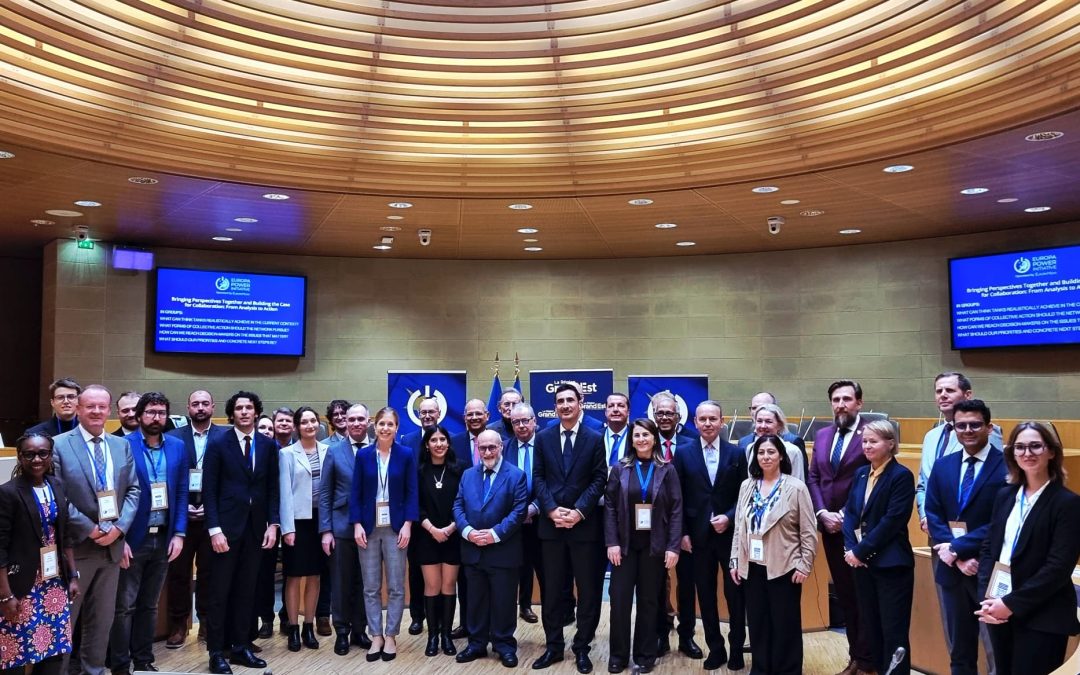
The Director of the Institute, Dr Jakša Puljiz, participated in the Europa Power Conference and the accompanying Global Dialogue on Power, held in Strasbourg from 21 to 23 October 2026. The international gathering focused on changes in the nature of global power, Europe’s strategic autonomy, and the European Union’s ability to act more effectively in the new geopolitical and technological environment.
The conference brought together representatives of leading European and international think tanks, academia, diplomacy, business, and other institutions to exchange regional perspectives on emerging forms of systemic power. Discussions focused on the growing interconnectedness of economic strength, technology, finance, energy, industrial capacity, institutions, social cohesion, and strategic resilience in shaping the ability of states and political communities to act in the prevailing international context.
In his contributions to the discussions, Dr Puljiz emphasised that Europe’s main challenge is not necessarily a lack of resources, but rather its ability to translate them into shared strategic capabilities and effective action. He particularly highlighted the need to better connect Europe’s economic, technological, financial, and industrial potential, as well as to strengthen the links between European strategic objectives and the implementation capacities of Member States.
In this context, the role of smaller EU Member States was also emphasised. Rather than viewing them solely as beneficiaries of Europe’s economic and political strength, smaller Member States can actively contribute to shared European capabilities by specialising in specific areas, developing their own comparative advantages, and connecting and scaling these advantages at the EU level. Internal cohesion was also highlighted as a key element of Europe’s capacity to act. This entails ensuring that the economic and social costs of major strategic transformations are distributed in a way that sustains long-term political support for joint European action.
The discussions also addressed the role of the EU’s future Multiannual Financial Framework in financing European public goods and strategic capabilities, as well as the question of the policy areas in which national solutions are no longer sufficient and greater European scale and integration are required.
Document: