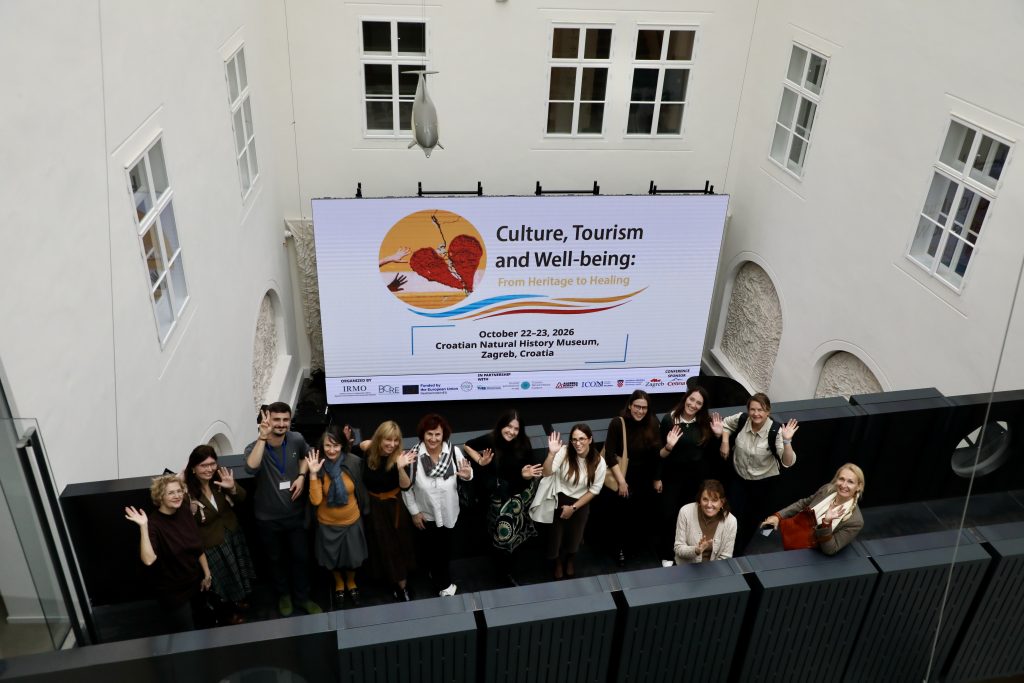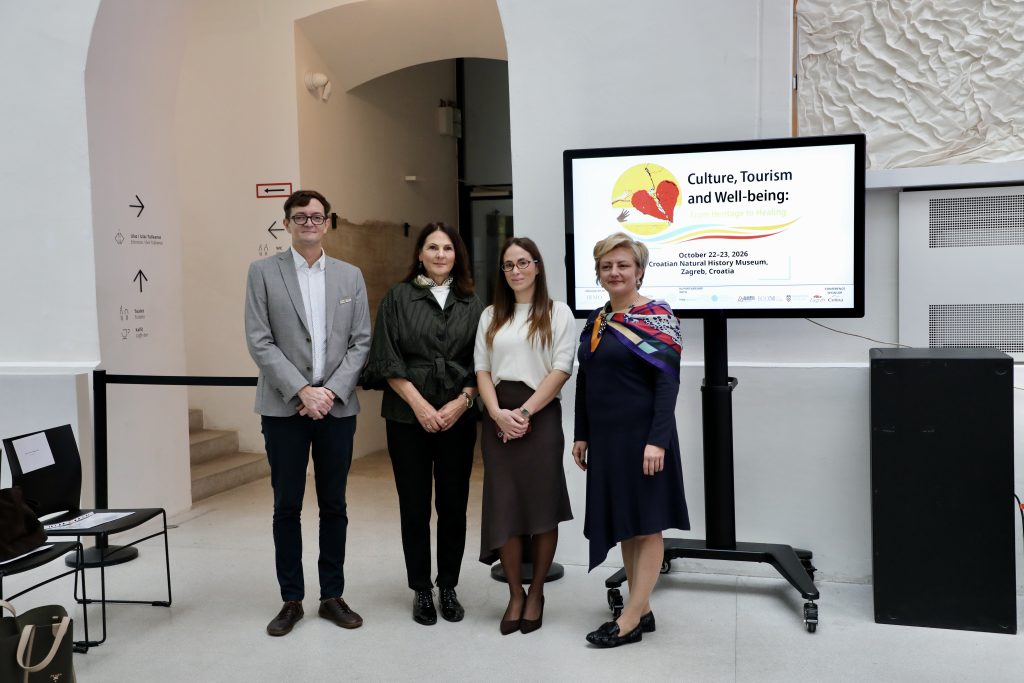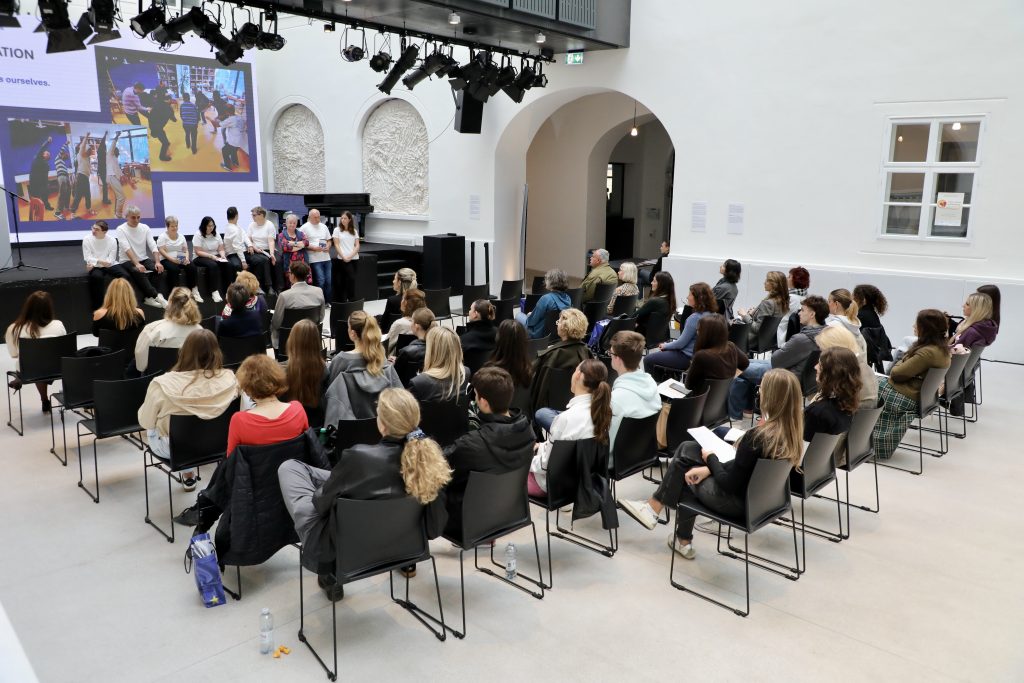
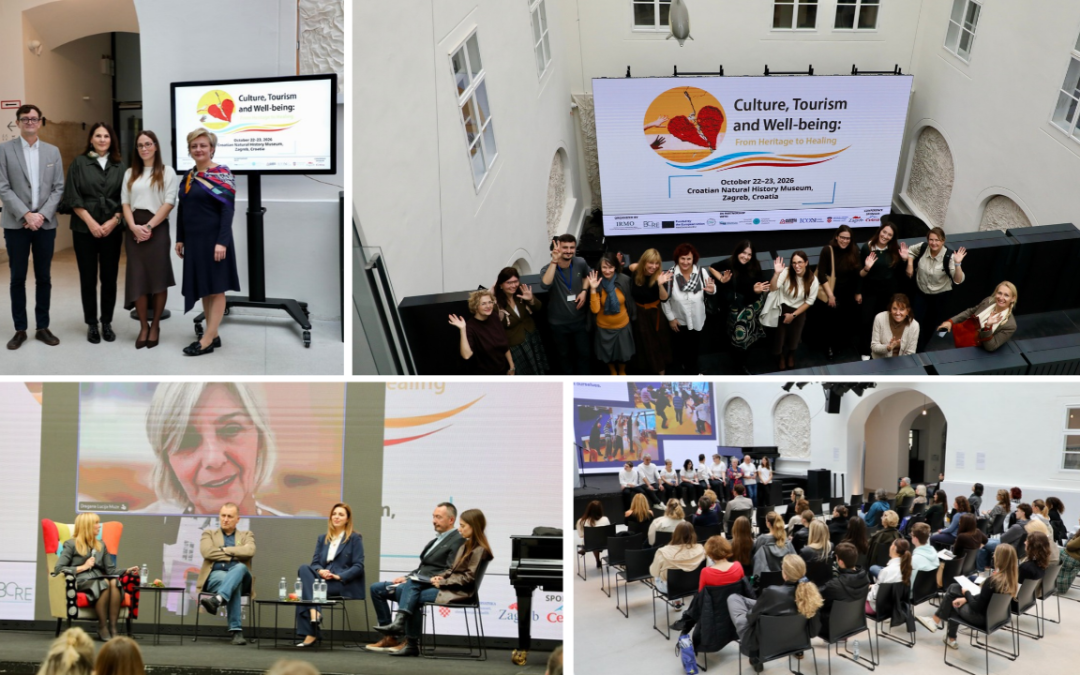
The international scientific and professional conference “Culture, Tourism and Well-being: From Heritage to Healing” took place at the Croatian Natural History Museum in Zagreb on 22–23 October 2026. It brought together approximately 60 participants from Croatia, Slovenia, Poland, the United States and Portugal to explore the connections between cultural experiences, tourism, mental health and individual and community well-being.
The conference was jointly organised by the Centre for Sustainable Development through Culture (CORK) at the Institute for Development and International Relations (IRMO), within the BORE research project, CinTurs – Research Centre for Tourism, Sustainability and Well-being in Portugal, and the Croatian Natural History Museum. The event was supported by Algebra Bernays University, ICOM Croatia and the Zagreb Tourist Board, with sponsorship from Cetina.
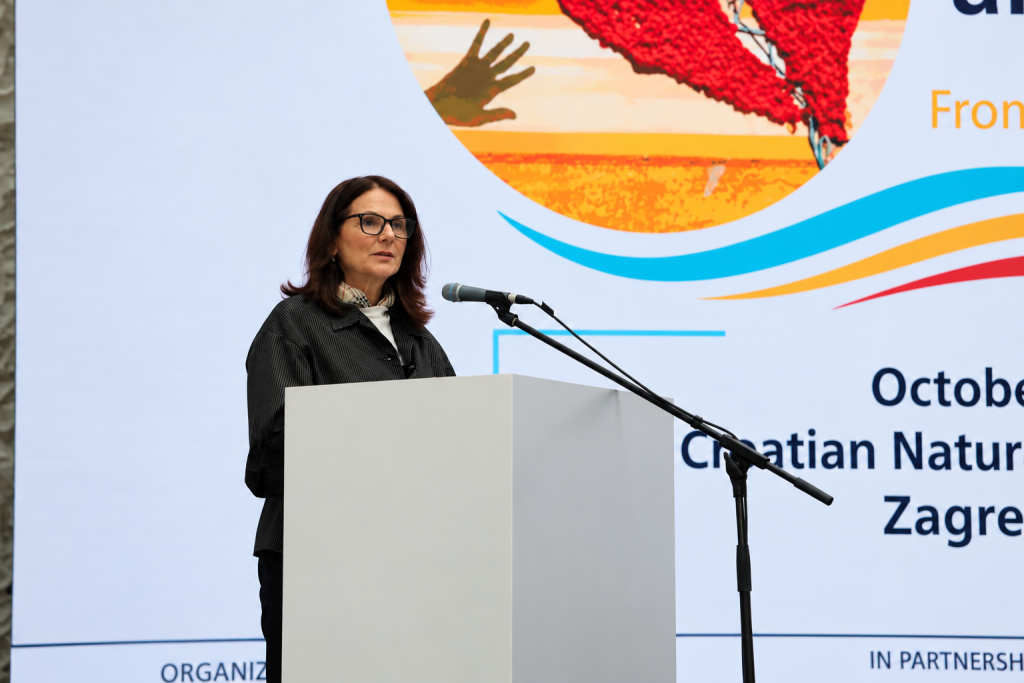
The conference was officially opened by Dražena Vrselja, State Secretary at the Ministry of Culture and Media of the Republic of Croatia. Opening remarks were also delivered by Daniela Angelina Jelinčić, PhD (IRMO), Maria Manuela Martins Guerreiro, PhD (CinTurs), Iva Mihoci, PhD (Croatian Natural History Museum), and Matija Dronjić (ICOM Croatia).
Scientific programme: from cultural experience to well-being
The opening keynote, “Designing Cultural Experiences for Well-being: From Psychological Evidence to Practice”, was delivered by Marta Šveb Dragija, PhD, an IRMO researcher and Conference Chair. Her presentation explored psychological mechanisms through which cultural experiences may contribute to well-being and considered how research evidence can inform the design of museums and other cultural experiences.
The two-day scientific programme comprised four thematic panels addressing the design of cultural experiences for well-being; culture, well-being and inclusive participation; heritage, place and community well-being; and evidence, measurement and practice in assessing the effects of cultural participation. Discussions covered emotional and sensory engagement, accessibility, the well-being of local communities, and evidence-based evaluation of cultural programmes.
Featured speakers included Iva Fattorini, MD, MSc (University of Oxford / Artocene), who discussed arts, culture, health and social prescribing; Edita Bilaver (Film in Hospital / Kids Meet Art), who presented cultural participation in healthcare settings; Patty Janes, PhD (Grand Valley State University, USA), who addressed volunteering, heritage preservation and well-being; and Melinda Šefčić, PhD (Academy of Fine Arts, University of Zagreb), who explored emotional and sensory engagement through public art.
In the fourth panel, Marta Šveb Dragija, PhD, Daniela Angelina Jelinčić, PhD, and Ana Havelka Meštrović, PhD, presented “Beyond Attendance Scores: Measuring Well-being in Cultural Participation”, addressing methodological questions in measuring well-being associated with cultural participation.
Connecting research and practice
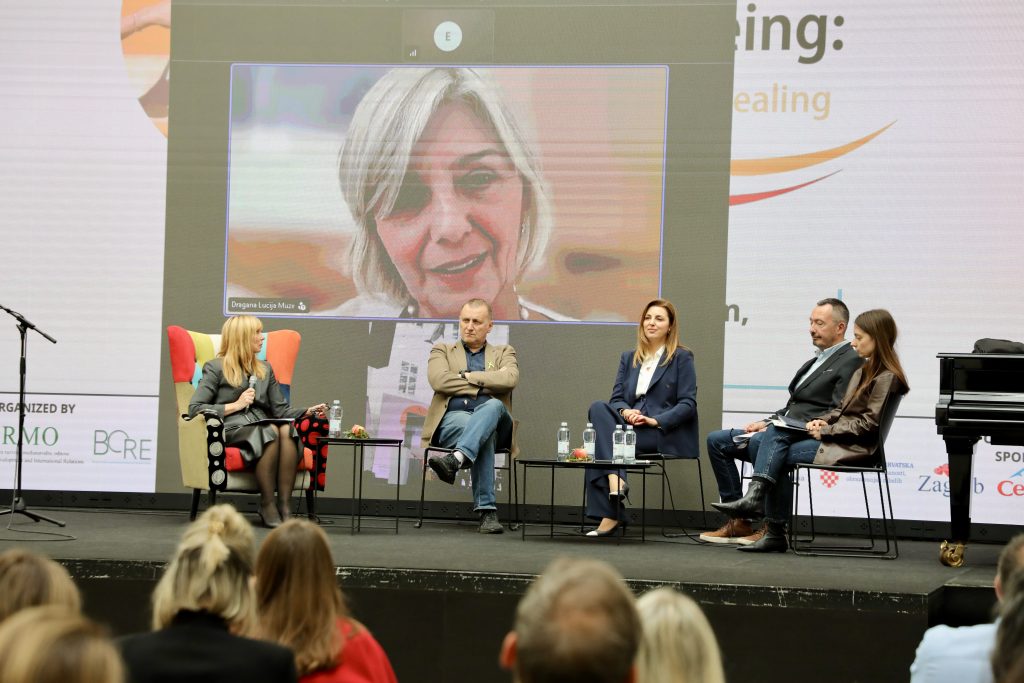
The concluding practitioners’ panel, “From Research to Reality: Can Culture and Tourism Be Designed for Well-being?”, was moderated by Daniela Angelina Jelinčić, PhD. Participants included Pia Sopta (Ministry of Culture and Media), Marinko Artuković, PhD (Croatian Institute of Public Health), Katarina Miličević, PhD (Tourism Lab / thinktourism), Dragana Lucija Ratković Aydemir (MUZE), and Hrvoje Handl, MD (Sveti Ivan Psychiatry Clinic). The discussion focused on collaboration across the cultural, tourism and health sectors and on translating research into programmes for diverse audiences.
A central message emerging from the discussions was the importance of studying the potential well-being benefits of culture systematically, while recognising individual needs, accessibility, and the quality of cultural experiences. The conference also created opportunities for further interdisciplinary research and international professional collaboration.
Cultural programme and international exchange
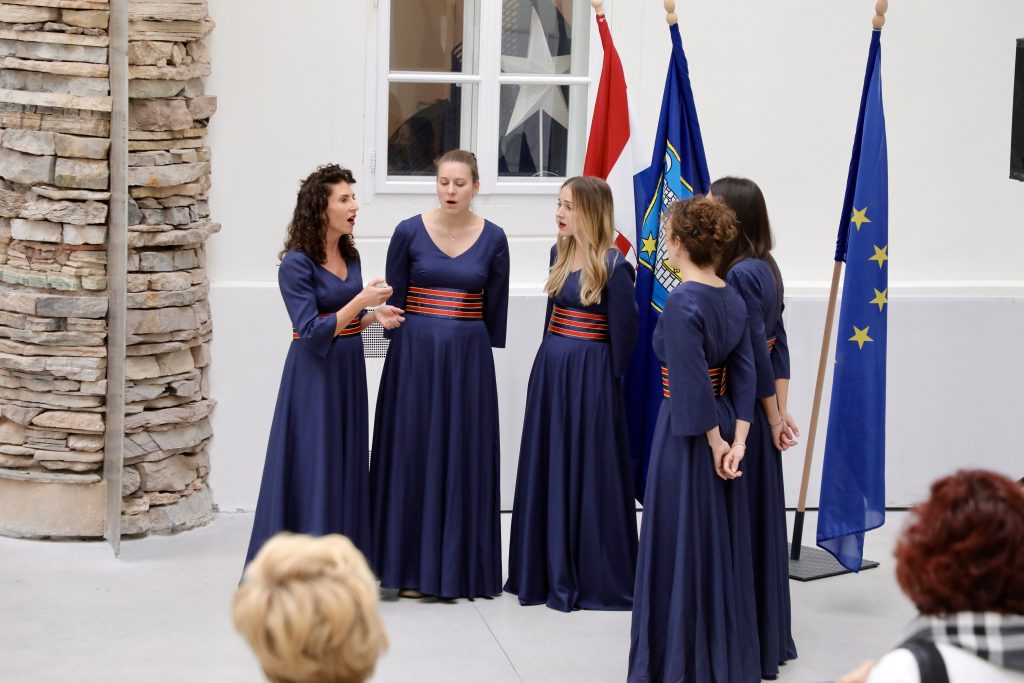
Alongside the scientific and professional sessions, participants enjoyed a performance by the female klapa ensemble Figurin, introducing the Croatian tradition of klapa singing, as well as a guided tour of the Croatian Natural History Museum. These activities connected discussions about cultural experiences with first-hand participation.
The organisers thank all speakers, participants, partners and supporters for contributing to the conference.
Photography: Marko Raič