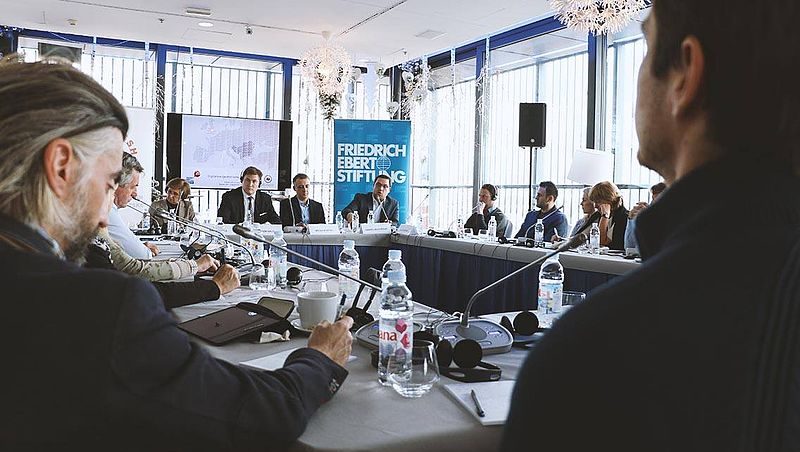
Višnja Samardžija participated at the conference Digital economy and labour issues
The Head of Department for European integration Visnja Samardzija participated at the conference Digital economy and labour issues taking place in Zagreb, November 16, 2016. The conference was jointly organized by the Friedrich Ebert Stiftung Zagreb and the Union of...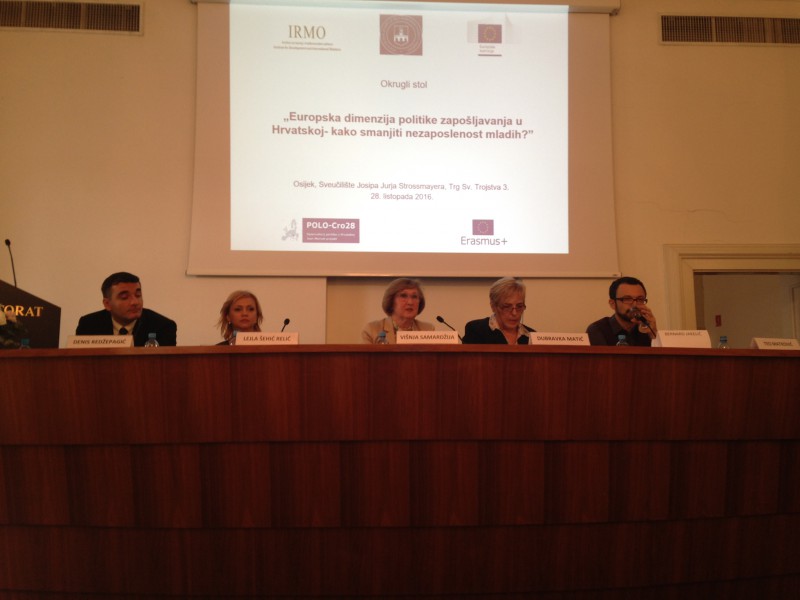
“The European dimension of the employment policy in Croatia – how to decrease youth unemployment?” – the round table within the POLO-Cro28 – Policy Observatory in Croatia Jean Monnet support to institutions project held in Osijek
Osijek: Josip Juraj Strossmayer University of Osijek 28th October 2016, 10.00 – 13.00 A round table “The European dimension of the employment policy in Croatia – how to decrease youth unemployment?” was held on 28th October 2016 in the hall of the Rectorate of Josip...
Tenth Issue of the IRMO Brief Published
The issue No. 10/2016 deals with geostrategic outlook of increasingly relevant Arctic region in the contemporary international environment. It analyses consequences of ice melting in the High North and potential implications for shipping opportunities and extraction...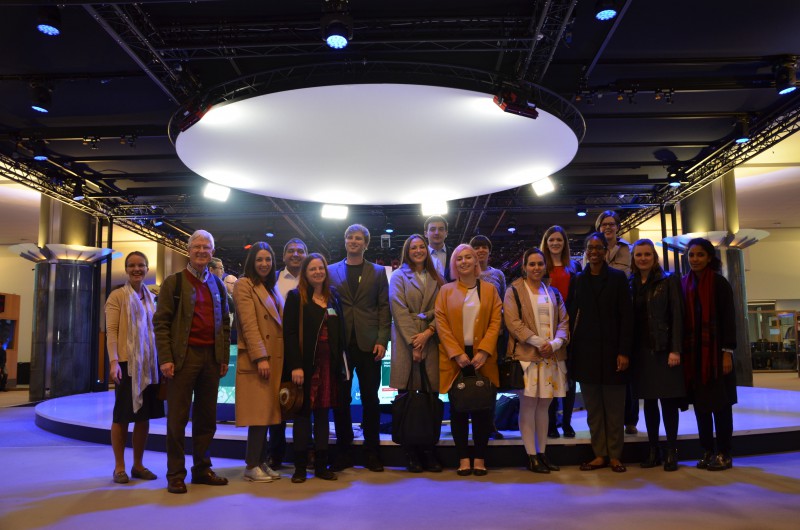
Young IRMO researcher participated in the PONT career skills training in Brussels
Young IRMO researcher Ivana Skazlić participated in the PONT career skills training, taking place in Brussels, 17-21 October 2016. A 5-day intensive training was organized by TEPSA in the framework of the Professional Training on EU Affairs – PONT project, co-funded...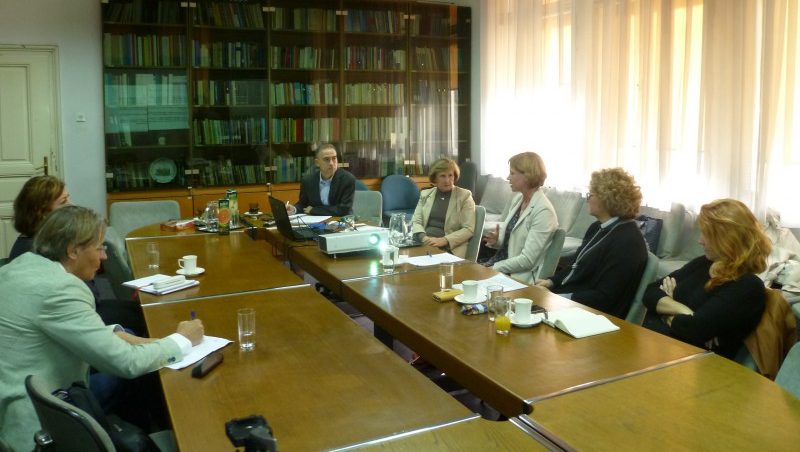
Focus group on industrial relations in Croatia from the employers’ perspective
On Wednesday, 19th of October 2016 a focus group on industrial relations in Croatia in the period of economic recovery (last 3-5 years) from the employers̕ perspective was held in IRMO. The participants were representatives of employers at the tripartite, sectoral and...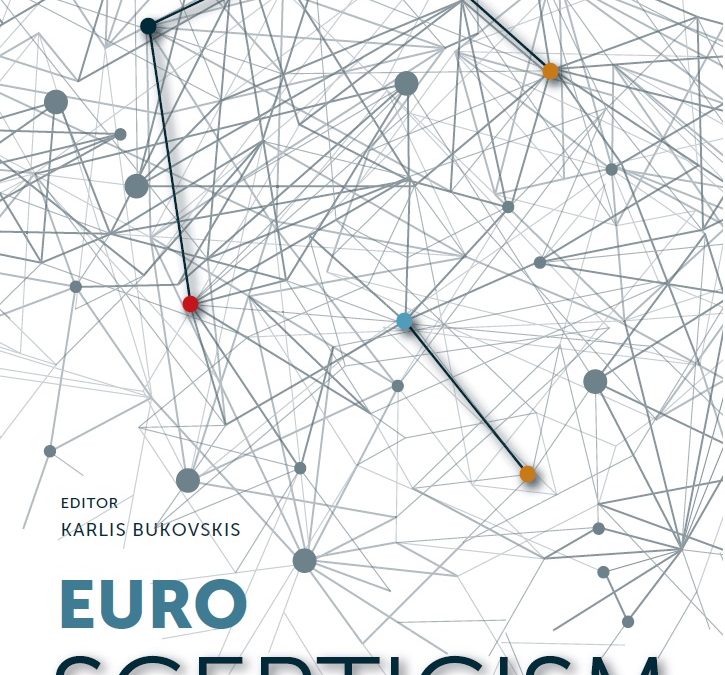
Chapter in the book “Eurocepticism in Small EU Member States”
Editor: Karlis Bukovskis Author of chapter: Višnja Samardžija Title of chapter: How Euroscepticism in Croatia? Publisher: Latvian Institute of International Affairs Year: 2016 ISBN 978-9984-583-81-5 The book published by Latvian Institute for International Relations...
Chapter on Croatia by V. Samardžija in the book “Eurocepticism in Small EU Member States” published by Latvian Institute for International Relations from Riga
The book published by Latvian Institute for International Relations from Rigadeals with the Euroscepticism in small EU member states. Starting from the analyses in seven small EU member states (Luxembourg, Ireland, Portugal, Finland, Latvia, Bulgaria and Croatia), the...
Ninth Issue of the IRMO Brief Published
The ninth issue of IRMO Brief deals with possible consequences of Brexit for the unity of the United Kingdom. At the June referendum on UK’s membership in the European Union two constituent countries – England and Wales – voted to leave, and two – Scotland and...
Policy paper “The significance of the European semester for economic policy reforms in Croatia andselected new EU member states” published
Policy paper “The significance of the European semester for economic policy reforms in Croatia andselected new EU member states”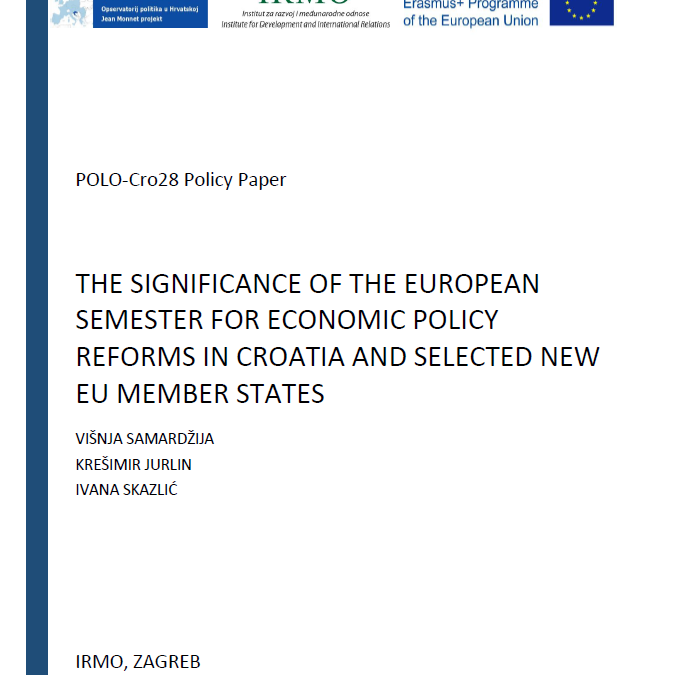
Policy paper “The significance of the European semester for economic policy reforms in Croatia andselected new EU member states”
Authors: Krešimir Jurlin, Višnja Samardžij and Ivana Skazlić Publiher: IRMO Year: 2016 DOWNLOADS The significance of the European semester for economic policy reforms in Croatia andselected new EU member...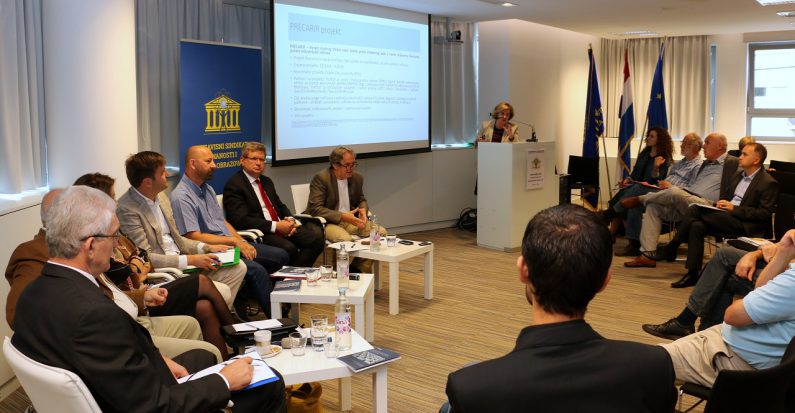
The main findings of the book ‛Nonstandard work in Croatia: Challenges and perspectives in selected sectors’ presented
Višnja Samardžija and Hrvoje Butković have participated at the round table ‛Dual labour market: Precarious work, the rise of non-standard forms of work’ held in Zagreb on Tuesday, 6th September. The round table was organized by the Independent Union of Research and...
Nonstandard work in Croatia: Challenges and perspectives in selected sectors
Authors: Hrvoje Butković and Višnja Samardžija in cooperation with Ivana Skazlić and Ivana Čavar Publisher: Institute for Development and International Relations (IRMO) Year: 2016. ISBN 978-953-6096-76-3 Based on the desk research and the interviews the team of IRMO...
Eighth Issue of the IRMO Brief Published
Eighth issue of IRMO Brief written by M.Sc. Krševan Antun Dujmović analyzes the differences between the two presidential candidates, the Democrat Hillary Rodham Clinton, and the Republican Donald John Trump ahead of the United States presidential election on 8...
Seventh Issue of the IRMO Brief Published
Seventh issue of IRMO Brief written by Marina Funduk, PhD, analyzes the challenges in facing climate change at the global level. It focuses on climate change agreements, from United Nations Framework Convention on Climate Change and Kyoto Protocol to Paris Agreement....
Sixth Issue of the IRMO Brief Published
IRMO Brief’s sixth issue of the author M.Sc. Krševan Antun Dujmović deals with Iran after the removal of international sanctions in January 2016 and impacts on golobal energy markets. In the brief the author argues the re-emergence of Iran on the oil and gas markets...
Fifth Issue of the IRMO Brief Published
IRMO Brief’s fifth issue deals with Kurdish efforts to achieve statehood and independence in their autonomous region in the north of Iraq on the 100th anniversary of the Sykes-Picot Agreement, which in 1916 divided the Middle East into several European interest zones....
The study ‛The rise of the dual labour market: fighting precarious employment in the new member states through industrial relations (PRECARIR) Country report: Croatia’
Authors: Hrvoje Butković and Višnja Samardžija in cooperation with Ivana Skazlić and Ivana Čavar Publisher: Central European Labour Studies Institute (CELSI) Year: 2016. The team of IRMO researchers has published a study about the nonstandard work in Croatia in the...
Fourth Issue of the IRMO Brief Published
The fourth issue of IRMO Brief written by Sandro Knezović, PhD, analyzes the challenges that accompany the return of the geopolitics to Southeast Europe. It deals with the combined effects of EU’s and NATO’s policies in the region, their inconsistencies and loopholes...